
The Parent Effect: How Support Shapes Youth Sports for Better or Worse
In youth sports, the sidelines are often as influential as the playing field. Parents play an undeniable role in shaping a child’s experience in athletics. Their words, actions, and attitudes can either build confidence and resilience or create stress and anxiety.
The difference? It lies in how we, as parents, approach our role in our child’s athletic journey.
The Power of Positive Support
When done right, parental support can be one of the greatest assets a young athlete can have. Encouraging effort over outcomes, fostering a love for the game, and celebrating small improvements all help to build a foundation of confidence and perseverance. The message should be clear: sports are about personal growth, enjoyment, and self-improvement, not just wins and losses.
Some of the most successful athletes in history credit their parents not for pushing them to win at all costs, but for reinforcing the values of discipline, effort, and patience. A child who feels supported—not pressured—will continue to show up, work hard, and develop naturally.
The Dangers of Unrealistic Expectations
Unfortunately, not all parental involvement is positive. Some parents fall into the trap of setting unrealistic expectations, pushing their children to achieve at a level that might not be developmentally appropriate. Others compare their child’s progress to peers, forgetting that children mature at vastly different rates. An eight-year-old who seems uncoordinated today may, by age twelve, be one of the best on the field. Development is a process, and labeling a child too early can have long-lasting negative effects.
This pressure often manifests as heightened anxiety, decreased self-confidence, and, in many cases, burnout. The irony? The very children who might have become great athletes later on end up walking away from sports entirely because they no longer find joy in the experience.
Youth Sports as a Safe Haven
At their core, youth sports should be a space where children feel safe to explore, learn, and grow at their own pace. The goal should not be to measure a child’s success against others but to focus on individual improvement. Did they develop a new skill today? Did they put in effort and have fun? Were they good teammates and friends? These should be the markers of success, not a scoreboard or a comparison to another child’s performance.
When parents emphasize learning and progress rather than results, they create an environment where children feel free to push themselves without fear of failure. Every game, every practice becomes a new opportunity—not to prove something, but to improve something.
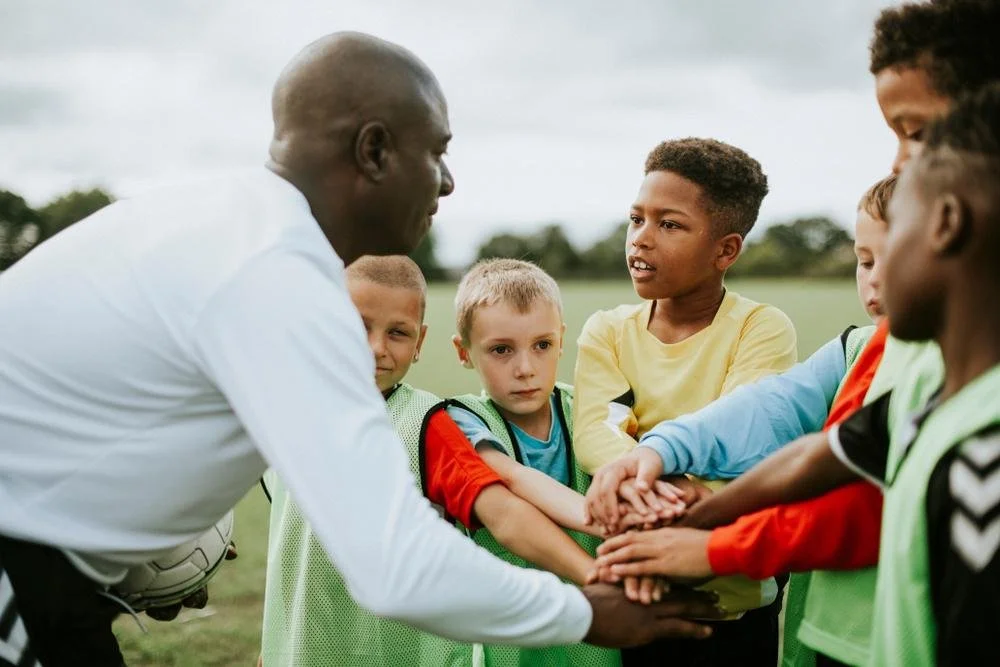
A Model for Success: What We Can Learn from Norway
If you're looking for proof that a focus on enjoyment and development over competition leads to long-term success, look no further than Norway. The Scandinavian country has taken a radically different approach to youth sports, one that has yielded stunning results on the world stage.
Norway operates under a philosophy known as the Joy of Sport for All, a model built on inclusion, participation, and personal growth. Unlike in many other countries, young athletes in Norway do not face early specialization or the threat of being cut from teams. Instead, every child is encouraged to participate, try different sports, and develop at their own pace without the stress of being left behind.
And what has this approach achieved? In the 2022 Winter Olympics, Norway took home more gold medals than any other country. Their success is no coincidence—it’s the product of a system that prioritizes long-term development, fun, and a love for sport over short-term results.
Imagine what would happen if more youth sports programs in the U.S. followed this model. How many children would stay engaged in sports longer? How many would grow into confident, well-rounded athletes, instead of feeling pressured to quit before reaching their full potential?
A Call to Action: Be a Change Agent in Youth Sports
As parents, coaches, and community members, we have an opportunity—a responsibility—to ensure that youth sports remain a positive and transformative experience for all children. We must resist the urge to judge success too soon, to label children before they’ve had the chance to develop, and to push them beyond what is healthy.
Instead, we should encourage effort over outcomes. We should remind our children that their worth is not defined by how they compare to others but by how they push themselves to grow. We should be their safe haven, not their biggest critic.
Youth sports should not be a pressure cooker of expectations but a place where children learn discipline, teamwork, and resilience in a way that fosters lifelong passion. If we adopt this mindset, we won’t just be raising better athletes—we’ll be raising happier, healthier, and more confident young people.
So the next time you find yourself on the sidelines, cheering your child on, ask yourself: Am I making this game about their development or about my expectations? The answer to that question could shape the future of their love for the sport.
Let’s commit to making youth sports what they were always meant to be—a joyful and enriching journey for every child, at every stage of their development.
Unite | Play | Thrive
